Report on the trip to the summer business school of Cambridge (interview with Roman Nikitin)
Recently, Roman Nikitin , ex-Microsoft's MVP and developer at ePythia startup, spent a week at the Ignite summer business school for young entrepreneurs in Cambridge. In the course of a half-hour conversation, it was possible not only to find out what this study provides, but also how to achieve free “buns” from potential business partners in Britain; what distinguishes the western investor from the Russian in the manner of communication; and what secret information about startups is stored in the library of the university city.
Roman, what gave you and the team this trip?
- The strongest effect that I experienced was communication - it was a great opportunity to refine the pitch. For a week, 50 times talked about the project to completely different people: fellow startups from around the world, experienced entrepreneurs, business angels, researchers from a number of universities. In principle, the reaction of the interlocutors and feedback was standard, few people began to delve deeply into the essence of the project. But I realized that it was not clear to them what it was worth dwelling on in more detail, which, on the contrary, was faster to speak.
That is, the whole thing only in the opportunity to communicate?
- Of course not. We reviewed our business plan with experts, identified weaknesses. We found out that our ePythia project needs to work better marketing. Well, connections have increased. In Ignite they gave an album with the contact information of each of the participants, mentors, teachers and organizers. For the past 2 weeks, we are actively looking for each other on the social. Networks: These are the people who can be contacted in the future.
For example?
- The mentor of my group, Simon, turned out to be the owner of a British company that makes analytics for projects that are just entering the market. His company will review our startup for free, give it a certain rating of attractiveness.
')
And what kind of people came to learn?
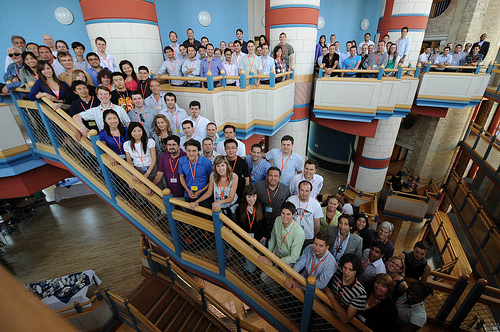
- There were more than 70 people. We were divided into groups in advance, 6-7 each, assigned a mentor and two MBA graduates. They worked with us all week. Participants were mostly from 28 years old. So I, at 23, was the youngest there. Businessmen, directors of directions came to study (there were many IT directors), top managers. Many presented projects related to hardware and technology, and not software and mobile applications like ours.
How did they get into Ignite?
- In my opinion, our project was the only one who got there thanks to a victory in a startup tournament. People in the summer school could be divided into 4 types. The first is the students of Cambridge itself, the second is the students of the University of Edinburgh. They all came with their projects and studies. A lot of people were from Spain. As far as I understand, there is a program for training young entrepreneurs, which results in projects being sent for such an internship in Cambridge. And the fourth type is “loners”. Among them were Italians and even Americans. Someone came by himself, the company paid for someone to study.
A week of study costs between 1,200 and 3,000 pounds. How much did you pay?
“I only paid for the beer in the pubs for dinner.” For study and the road paid Business Incubator ANH . He became a sponsor of this trip, which relied on the winner of the Harvest startup tournament from GreenfieldProject . The latter are just partners Ignite.
And living?
- It was included in the cost of training. Maybe a few people lived in hotels - someone could come with the family. Most of those who came to Ignite were resettled in 5-6 community colleges, 10 minutes walk from the business school building.
Tutorials given?
- Yes, we were given educational materials, such a set of small books. But the main thing was the opportunity to go to the Cambridge library. There are a lot of interesting statistics, unique materials, which you can only get acquainted with “live”.
And how was the study built? What was going on?
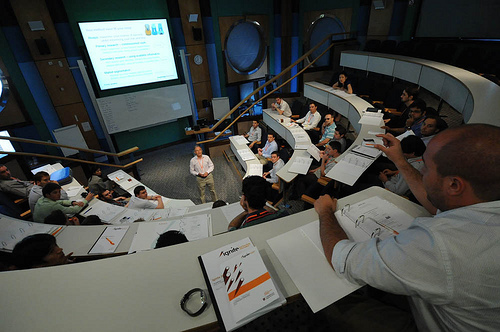
- Six school days were divided into topics: marketing, business model, finance, team, selling ideas and the final presentation. The day began with a general hour and a half lecture. It was read by one of the mentors who are knowledgeable in this topic. For example, once the lecturer was the founder of ARM .
- Then a break and lectures on sub-topics - more interactive, with questions from the audience, discussions. We chose which way to go. After lunch, we worked in groups with a mentor and MBA graduates. It is not necessary that we dealt with the same topic all day. It was always possible to return to the already passed, something to additionally calculate, discuss, correct.
That is, businessmen led the course?
- Yes, British entrepreneurs were teachers and mentors . Many of them have already gone through one project. Actually, the organizers of Ignite are also people from the business world - Shai Vyakarnan and Simon Pratten, the owner of the research company I was talking about.
- We could easily talk to any of them in between lectures. It happened like this: we went out to the hall where we could drink coffee, and began to communicate. Mentors came up to one, then to another, asked about projects, gave feedback. For half an hour to talk about his idea had three people. And in the evening in the pubs on the main street of Cambridge, communication continued, only it was even less formal.
Did you get suggestions on business from participants or teachers?
- Maybe it's in the Western way of thinking (from Eastern Europe there was only me and one Hungarian), but they themselves offer you nothing. Now, if you start to be interested in something specific, they can help, suggest. For example, the same story with how my mentor suggested making free analytics on ePythia . When I learned what his firm was doing, I myself asked if they could help us. And in response, he promised to send a free voucher.
According to the story, the business school is a very informal place. I thought Cambridge was much more conservative ...
- It was my first trip to England, so I myself expected to see a slightly different country and more prim people. Everything turned out to be completely different, starting with the weather. It was very hot; as I was told, atypical for this time of year. We got into a peculiar atmosphere - a city-university, where everyone rides bicycles, and professors can be met in the evening in a pub. People were responsive, with the Scots so we all talked well.
God be with them, Scots. C investors to communicate failed?
- In the educational process, investors (mainly business angels working with Cambridge projects) act as advisers. It is unrealistic to receive a proposal, unless you get through to them during non-school time. We went to a meeting with investors in our group: two people from the company listened to the pitch, asked questions, recommended something.
- Also, investors, already from different companies, attended the final 15-minute presentation of the project at the end of the training. This time, they were not in a hurry with the feedback: after returning, I received a letter from them, where they indicated points that are worth paying attention to.
Is the style of communication between investors in the West and in Russia very different?
- It seems to me that in Russia they are trying to criticize more strongly, and some even allow themselves to be arrogant. In the West, no one will grin evilly and in the course of your speech give a remark like "guys, yes you do not understand anything about it." But foreign experts can then send you a letter indicating the errors and some summary of the project. The general atmosphere at the presentations is more benevolent, although, of course, we have enough positive people.
What is the "baggage" of developments worth going to business school?
- It is best to be “packaged”: make a business plan, explore the market, think out a short pitch and a 15-minute presentation of the project. Of course, you can come with nothing at all, if you do not have experience in such things or in your project there is nobody to do them. But it should be understood - a week is not enough to master and work out every aspect from the beginning.
Did you get a diploma based on the results of your studies?
- We have received an international certificate of graduates Ignite. Perhaps the paper itself means not so much. But the fact of a trip to Cambridge, I think, will add weight to us. In the end, we climbed another step, passed another test. There were many positive reviews, people said that it was possible to build a business around our idea.
PS This is all that we managed to discuss with Roman romannikitin . Those who do not have enough information will be able to personally communicate with Nikitin on iCamp. There you can find Peter tatisch Tatishchev from GreenfieldProject - he also studied at the Cambridge business school.
Roman, what gave you and the team this trip?
- The strongest effect that I experienced was communication - it was a great opportunity to refine the pitch. For a week, 50 times talked about the project to completely different people: fellow startups from around the world, experienced entrepreneurs, business angels, researchers from a number of universities. In principle, the reaction of the interlocutors and feedback was standard, few people began to delve deeply into the essence of the project. But I realized that it was not clear to them what it was worth dwelling on in more detail, which, on the contrary, was faster to speak.
That is, the whole thing only in the opportunity to communicate?
- Of course not. We reviewed our business plan with experts, identified weaknesses. We found out that our ePythia project needs to work better marketing. Well, connections have increased. In Ignite they gave an album with the contact information of each of the participants, mentors, teachers and organizers. For the past 2 weeks, we are actively looking for each other on the social. Networks: These are the people who can be contacted in the future.
For example?
- The mentor of my group, Simon, turned out to be the owner of a British company that makes analytics for projects that are just entering the market. His company will review our startup for free, give it a certain rating of attractiveness.
')
And what kind of people came to learn?
- There were more than 70 people. We were divided into groups in advance, 6-7 each, assigned a mentor and two MBA graduates. They worked with us all week. Participants were mostly from 28 years old. So I, at 23, was the youngest there. Businessmen, directors of directions came to study (there were many IT directors), top managers. Many presented projects related to hardware and technology, and not software and mobile applications like ours.
How did they get into Ignite?
- In my opinion, our project was the only one who got there thanks to a victory in a startup tournament. People in the summer school could be divided into 4 types. The first is the students of Cambridge itself, the second is the students of the University of Edinburgh. They all came with their projects and studies. A lot of people were from Spain. As far as I understand, there is a program for training young entrepreneurs, which results in projects being sent for such an internship in Cambridge. And the fourth type is “loners”. Among them were Italians and even Americans. Someone came by himself, the company paid for someone to study.
A week of study costs between 1,200 and 3,000 pounds. How much did you pay?
“I only paid for the beer in the pubs for dinner.” For study and the road paid Business Incubator ANH . He became a sponsor of this trip, which relied on the winner of the Harvest startup tournament from GreenfieldProject . The latter are just partners Ignite.
And living?
- It was included in the cost of training. Maybe a few people lived in hotels - someone could come with the family. Most of those who came to Ignite were resettled in 5-6 community colleges, 10 minutes walk from the business school building.
Tutorials given?
- Yes, we were given educational materials, such a set of small books. But the main thing was the opportunity to go to the Cambridge library. There are a lot of interesting statistics, unique materials, which you can only get acquainted with “live”.
And how was the study built? What was going on?
- Six school days were divided into topics: marketing, business model, finance, team, selling ideas and the final presentation. The day began with a general hour and a half lecture. It was read by one of the mentors who are knowledgeable in this topic. For example, once the lecturer was the founder of ARM .
- Then a break and lectures on sub-topics - more interactive, with questions from the audience, discussions. We chose which way to go. After lunch, we worked in groups with a mentor and MBA graduates. It is not necessary that we dealt with the same topic all day. It was always possible to return to the already passed, something to additionally calculate, discuss, correct.
That is, businessmen led the course?
- Yes, British entrepreneurs were teachers and mentors . Many of them have already gone through one project. Actually, the organizers of Ignite are also people from the business world - Shai Vyakarnan and Simon Pratten, the owner of the research company I was talking about.
- We could easily talk to any of them in between lectures. It happened like this: we went out to the hall where we could drink coffee, and began to communicate. Mentors came up to one, then to another, asked about projects, gave feedback. For half an hour to talk about his idea had three people. And in the evening in the pubs on the main street of Cambridge, communication continued, only it was even less formal.
Did you get suggestions on business from participants or teachers?
- Maybe it's in the Western way of thinking (from Eastern Europe there was only me and one Hungarian), but they themselves offer you nothing. Now, if you start to be interested in something specific, they can help, suggest. For example, the same story with how my mentor suggested making free analytics on ePythia . When I learned what his firm was doing, I myself asked if they could help us. And in response, he promised to send a free voucher.
According to the story, the business school is a very informal place. I thought Cambridge was much more conservative ...
- It was my first trip to England, so I myself expected to see a slightly different country and more prim people. Everything turned out to be completely different, starting with the weather. It was very hot; as I was told, atypical for this time of year. We got into a peculiar atmosphere - a city-university, where everyone rides bicycles, and professors can be met in the evening in a pub. People were responsive, with the Scots so we all talked well.
God be with them, Scots. C investors to communicate failed?
- In the educational process, investors (mainly business angels working with Cambridge projects) act as advisers. It is unrealistic to receive a proposal, unless you get through to them during non-school time. We went to a meeting with investors in our group: two people from the company listened to the pitch, asked questions, recommended something.
- Also, investors, already from different companies, attended the final 15-minute presentation of the project at the end of the training. This time, they were not in a hurry with the feedback: after returning, I received a letter from them, where they indicated points that are worth paying attention to.
Is the style of communication between investors in the West and in Russia very different?
- It seems to me that in Russia they are trying to criticize more strongly, and some even allow themselves to be arrogant. In the West, no one will grin evilly and in the course of your speech give a remark like "guys, yes you do not understand anything about it." But foreign experts can then send you a letter indicating the errors and some summary of the project. The general atmosphere at the presentations is more benevolent, although, of course, we have enough positive people.
What is the "baggage" of developments worth going to business school?
- It is best to be “packaged”: make a business plan, explore the market, think out a short pitch and a 15-minute presentation of the project. Of course, you can come with nothing at all, if you do not have experience in such things or in your project there is nobody to do them. But it should be understood - a week is not enough to master and work out every aspect from the beginning.
Did you get a diploma based on the results of your studies?
- We have received an international certificate of graduates Ignite. Perhaps the paper itself means not so much. But the fact of a trip to Cambridge, I think, will add weight to us. In the end, we climbed another step, passed another test. There were many positive reviews, people said that it was possible to build a business around our idea.
PS This is all that we managed to discuss with Roman romannikitin . Those who do not have enough information will be able to personally communicate with Nikitin on iCamp. There you can find Peter tatisch Tatishchev from GreenfieldProject - he also studied at the Cambridge business school.
Source: https://habr.com/ru/post/99548/
All Articles