Gradual user involvement instead of registration form
Recently (this spring), Twitter has redesigned the registration process to increase the number of new users. And although in the new version one more page was added to the registration, that is, an additional step, the conversion still increased by 29%. Why did this happen? Thanks to gradual involvement.
Gradual involvement is the process of moving a user around an application or site, actually “trying” it and seeing all its benefits. In the normal registration process, the user is shown the form to be filled. Here, on the contrary, registration is either postponed until later, or takes place in the background, and the first user experience is focused on showing how to use the service and why it is needed.
Proper gradual involvement tells the user about the main essence of the service through simple interactions. If you make a person happy at the same time - even better. Will Wright, creator of Sims & Spore, believes that games should allow a person to win in the first 5 seconds. This is a good philosophy to achieve gradual engagement. In fact, you can allow people in one or two simple interactions to do what is the meaning of your service. This is the best option.
')
The term “gradual engagement” I translate as “gradual engagement”. In my opinion, it accurately reflects the essence, but you can specify your own version in the comments.
Exploring its users, Twitter discovered that while celebrities with their tweets were the only reason people came to Twitter, it was very difficult to keep an audience. In fact, people on Twitter kept their passions: hobbies, conversations with experts in a particular field and friends. This is the main essence of the service, which should be based on gradual involvement.
This is how Twitter registration looked like before changes.

She missed the mark. If a person decided to register, he was greeted by a form where he:
In the new version after creating an account, the user sees a list of topics that may interest him. Topics are divided into the most popular categories (music, entertainment, fashion, art and design), and also include current events filled with tweeter editors.
In the previous registration version, users saw a list of popular tweeters who could only be interested in them by chance. Now they themselves can choose exactly what they need. This is the main essence of Twitter and, as a result, an excellent approach to gradual involvement. In the new version, people start to follow what they are interested in, and they are less likely to be in front of an empty home page.
New version of registration on Twitter
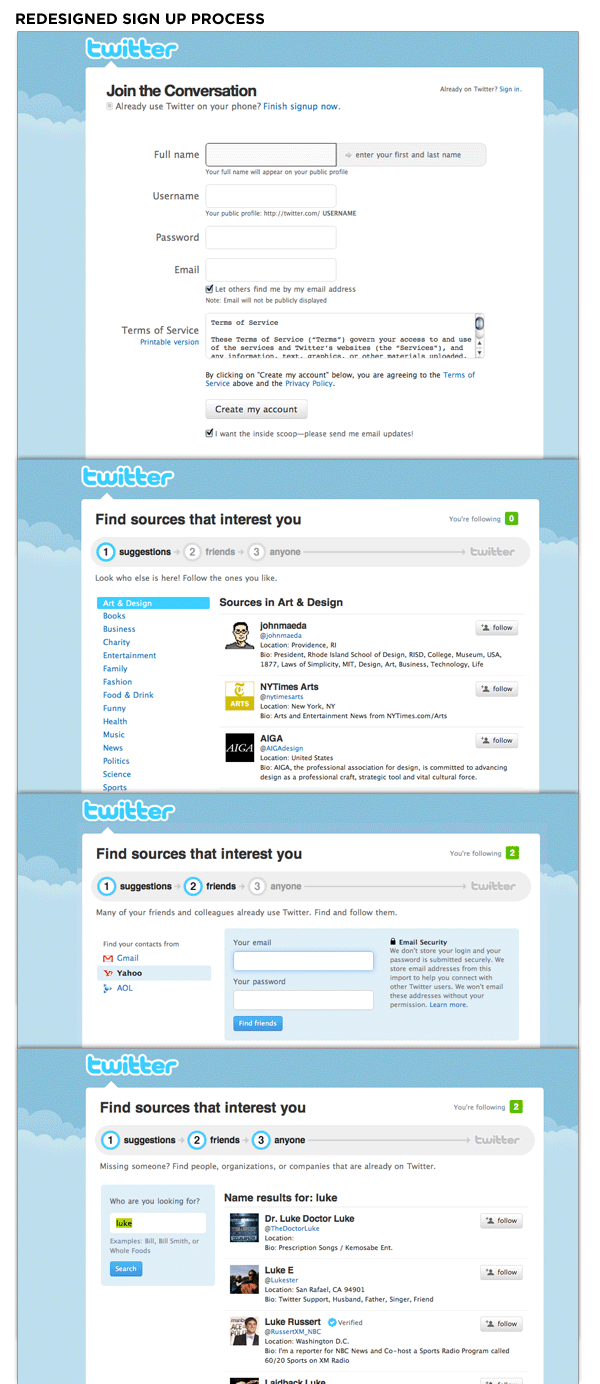
And although the new registration process consists of 4 steps instead of 3 and takes more time, it is completed by 29% more people who become much more involved in Twitter than before.
Personally, I (the translator too) are very curious to see what would have happened if the creation of an account had taken place after people began to follow the topics of interest and friends. Now it comes before people get personal benefits from the Tweeter. As I noted earlier, this gradual engagement will postpone the creation of an account for later or hold it in the background.
Making people fill out forms is one way to get information. On sites this is a de facto standard. But it should not be so. Instead of showing people forms every time, it’s better to turn to the principles of gradual involvement.
It allows us to collect information from people in such a way as to involve them in the use of the application. In fact, we educate people about its benefits and opportunities.
Gradual involvement is the task of the information architecture, because it forces us to think about the main essence of the application and develop a process that introduces people to the program, while also collecting the necessary information. The sequence of information requests through interactions allows you to make the first acquaintance with the application more useful and memorable.
Gradual involvement is the process of moving a user around an application or site, actually “trying” it and seeing all its benefits. In the normal registration process, the user is shown the form to be filled. Here, on the contrary, registration is either postponed until later, or takes place in the background, and the first user experience is focused on showing how to use the service and why it is needed.
Proper gradual involvement tells the user about the main essence of the service through simple interactions. If you make a person happy at the same time - even better. Will Wright, creator of Sims & Spore, believes that games should allow a person to win in the first 5 seconds. This is a good philosophy to achieve gradual engagement. In fact, you can allow people in one or two simple interactions to do what is the meaning of your service. This is the best option.
')
The term “gradual engagement” I translate as “gradual engagement”. In my opinion, it accurately reflects the essence, but you can specify your own version in the comments.
Exploring its users, Twitter discovered that while celebrities with their tweets were the only reason people came to Twitter, it was very difficult to keep an audience. In fact, people on Twitter kept their passions: hobbies, conversations with experts in a particular field and friends. This is the main essence of the service, which should be based on gradual involvement.
This is how Twitter registration looked like before changes.
She missed the mark. If a person decided to register, he was greeted by a form where he:
- had to create an account
- could find friends through my mail account,
- view a list of the most popular tweeters that could be folded, and
- Finally, if I couldn’t find anything or missed the previous two steps, then I saw a blank page asking what you are doing.
In the new version after creating an account, the user sees a list of topics that may interest him. Topics are divided into the most popular categories (music, entertainment, fashion, art and design), and also include current events filled with tweeter editors.
In the previous registration version, users saw a list of popular tweeters who could only be interested in them by chance. Now they themselves can choose exactly what they need. This is the main essence of Twitter and, as a result, an excellent approach to gradual involvement. In the new version, people start to follow what they are interested in, and they are less likely to be in front of an empty home page.
New version of registration on Twitter
And although the new registration process consists of 4 steps instead of 3 and takes more time, it is completed by 29% more people who become much more involved in Twitter than before.
Personally, I (the translator too) are very curious to see what would have happened if the creation of an account had taken place after people began to follow the topics of interest and friends. Now it comes before people get personal benefits from the Tweeter. As I noted earlier, this gradual engagement will postpone the creation of an account for later or hold it in the background.
A few more thoughts
Making people fill out forms is one way to get information. On sites this is a de facto standard. But it should not be so. Instead of showing people forms every time, it’s better to turn to the principles of gradual involvement.
It allows us to collect information from people in such a way as to involve them in the use of the application. In fact, we educate people about its benefits and opportunities.
Gradual involvement is the task of the information architecture, because it forces us to think about the main essence of the application and develop a process that introduces people to the program, while also collecting the necessary information. The sequence of information requests through interactions allows you to make the first acquaintance with the application more useful and memorable.
Source: https://habr.com/ru/post/99305/
All Articles