Pro Education and Intel ClassMate PC Netbook
Yesterday I did a review of the latest generation Intel CMPC school netbook - apparently, he liked it a lot. Today we are finishing the second season of “ Five weeks with Intel ” and decided to dedicate it to the extremely urgent topic of computers and school education - on the one hand, the school year is not far off, and on the other, few people know that for Intel universal computerization and digital education in particular is a top priority.

Another unique opportunity to find answers to your questions directly from Intel ... unless, of course, they are not yet under the cut.
Intel has been successfully engaged in educational programs all over the world for a long time, including in Russia - over the past 10 years, the company has invested more than 15 million dollars in Russian educational projects. Our students regularly take prizes at the International Science & Engineering Fair, one of the world's largest competitions for young scientists, which has been held for many years with the support of the company - since 1997, over half a thousand of our children have participated in ISEF. In addition, since 2007, within the “1 student: 1 computer” program, Intel has transferred about 6,000 computers to Russian schools, and more than 100,000 schoolchildren from all over Russia have participated in the “Learning from Intel” project since 2005.
')
Guest of our final series - Sergey Zhukov . Sergey will tell you about all these good undertakings in more detail.

Sergey : I am about five in Intel; the first one and a half years he worked in the Novosibirsk office of the company, since spring 2007 - in Moscow. I am a business development manager, working with corporate and government customers. In Moscow, I head our direction World Ahead, which includes a number of verticals, the main of which are education and Internet service providers (telecom operators). Accordingly, the main focus is to increase the level of use of ICT in education and promote the “computer + Internet” bandages (packages) to the mass market. In a nutshell, the mission of the World Ahead program is to provide access to modern technologies (computers and the Internet) to the next billion people over the next few years.
So this is a kind of business initiative that overlaps with a social initiative?
Yes, it affects various social strata, but in general it goes under the brand of the formation of new markets, and in terms of the development of existing markets with the emergence of new consumers. Basically, all this is somehow reduced to a bunch of “computer + Internet”, in addition, there is a separate large market vertical - education and the use of ICT in the educational process. And here we still clearly understand that in addition to iron, specialized content is needed and Internet access is needed, because this is already life in a kind of global space.
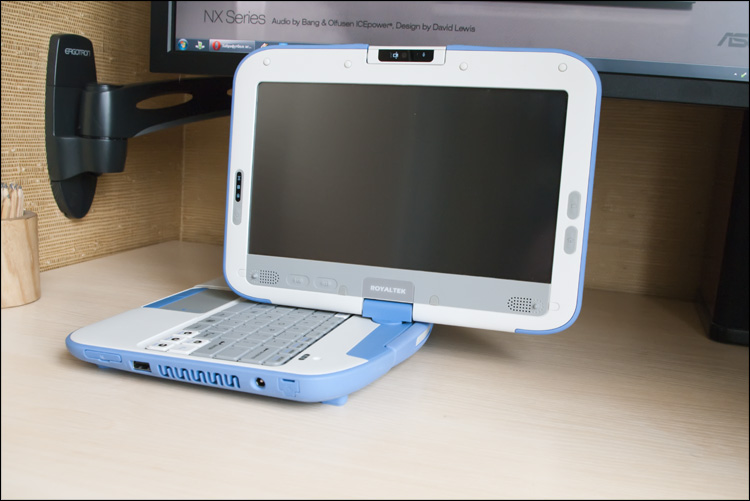
One of Intel's initiatives in education is the creation of a Classmate PC, a school computer. In the Galaxy, we published an interview with Laila Ibrahim , who described the work on the latest version of this school netbook.
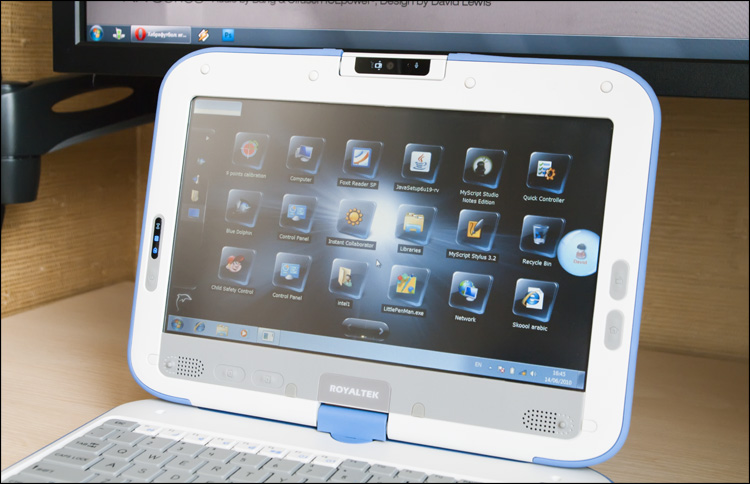
Yes, Laila is the head of EMPG (Emerging Market Platform Group), it was in the depths of this group that the reference design of the Classmate PC was developed, which a few years ago became the progenitor of the netbook market. At that time, various fantastic designs and concepts of devices that were affordable for wide sections of customers already existed, in particular within the framework of the OLPC project a “children's computer” was announced at a price of $ 100, but it turned out that the reference CMPC design became a mass product. which very quickly followed various netbooks of major vendors, such as ASUS. At the heart of CMCP lay Intel's design, first on the Celeron platform and only then on the Intel Atom. That is, it turned out that CMPC, the design made for education, became the ancestor of the entire netbook trend - this is one of the missions that he completed. The second mission of the project is to create a netbook with enhanced protection for a somewhat “aggressive” (with respect to equipment) school environment , so the CMPC has a more durable case, a protective casing, and in the latest version, rubberized beads and a dust-proof keyboard. In addition, the impact resistance of these computers is about one and a half times higher, as evidenced by industry tests. Now the third generation of these CMPCs has been released: the first one was equipped with a seven-inch screen, then there was a nine-inch model that existed in a conventional case and a transformer case, now ten-inch “shells” and transformers with a rotatable screen are on sale .
The hardware is understandable - by the way, a year ago we published on Habré a review of the second generation CMPC , which was adopted extremely favorably, and people even asked how to buy this school netbook, which is not officially sold to individuals (although there is a way - author's note). But CMPC is also famous for specialized software?

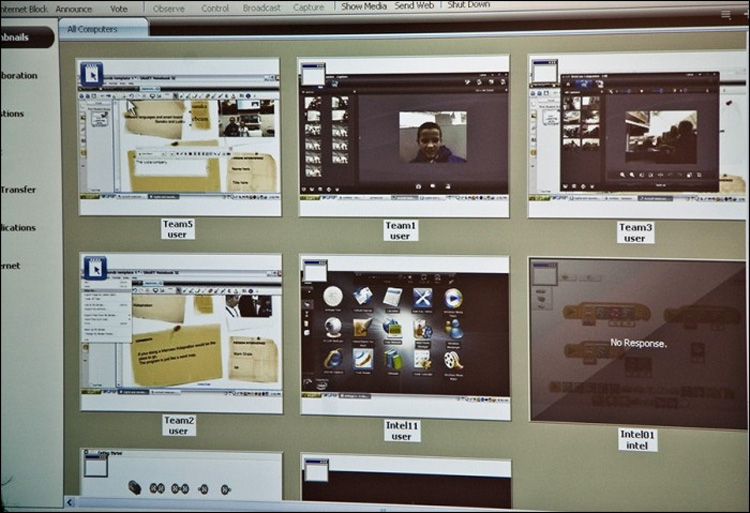
The situation is as follows. Along with developing reference designs for school-oriented computers, Intel is very seriously engaged in creating an “ecosystem” for these computers. On the one hand, our traditional development of the partner network helped us to create local companies that would produce it all in the region, and on the other hand, a stack of educational software solutions was built - the Intel Learning Series. In general, the nature of Intel under all hardware solutions to create software platforms, you can draw a parallel with the server processors and software that provides virtualization and vPro technology. This approach worked in the case of CMPC: the alliance around CMPC includes many companies, for example, the Norwegian EasyBits, which creates a specialized shell that builds on the operating system of the school netbook. There are also programs for working with interactive whiteboards, and software for organizing intraclass interaction. In principle, this is a fairly rich ecosystem, and people involved in the practical implementation of school computers in a particular school, in a particular city or region, can choose software from a fairly wide range of solutions. In addition, we focused on CMPC and standard content providers, companies that developed specialized educational content, something that can be used in teaching.
Six months ago, a representative of EasyBits told us that the company is developing an electronic document management project, including electronic textbooks, a system for selling them, licensing and distribution, and the beta version of this electronic store is ready. Has anything advanced in this story since then?
This is not exactly our area of activity. According to the experience of those pilot projects that we had as part of the program for the introduction of CMPC in education "1 student - 1 computer" I can say that the customer must choose the solution that suits him best. If you take three schools even in one microdistrict of Moscow, in all three there can be completely different teaching programs. They are all certified by the Ministry of Education, but they are different. In addition, teachers can also build their own teaching plans very creatively, so now, in connection with the approval of new standards of primary school, which will be introduced from 2011, and new standards for secondary schools, which will be introduced later, technologies and skills, which students receive, significantly modified. Therefore, I would look at the software part of our projects as a set of tools that is available to the educational system on request - the most important thing is that we give a choice.
What are the prospects for CMPC entry into the Russian market?
There are CMPCs on the Russian market - they are localized by two partners, Moscow’s Aquarius and ICL from Kazan, but last year educational budgets for informatization were frozen and significantly sequestered due to certain crisis events, and this year they began to defrost only in the second quarter - there are various projects and even planned purchases, but now talk about large volumes prematurely. So the main reason here is the economic situation in the country. Informatization in the Russian education is still going. In addition, we must understand that Intel does not have a goal to sell CMPC to every school, because first of all the computer equipment must be implemented in accordance with the usage model. CMPC on the device - the netbook, netbooks are good for content consumption and its minimum processing. If you start to work seriously with the creation and processing of content at school, be it multimedia, art or music classes at school, then there will certainly need more powerful computers - for example, computers based on Intel Core i3 and Core i5 processors. More "heavy" multimedia content will require more powerful Intel Core i7; In addition, the choice of laptop or desktop also depends on the model of computer use in a particular school.
Intel also holds a competition for teachers, in which the best teacher projects with the participation of a class of CMPC computers will receive this very class of CMPC computers as a gift.
We propose to try the concept of “ 1 student - 1 computer ” in everyday educational activities. In Russia, such projects have been running since 2007. In the first year of operation of this program in Russia, we created pilot zones in Nizhny Novgorod, Novosibirsk, Yaroslavl, St. Petersburg and Moscow, practicing the use of CMPC in primary school. Last year we decided to try the program across Russia and look at how this model can be applied in high school, so the contests of the past and of this year are aimed specifically at high school. The competition looks like this: a teacher or group of teachers creates their own project of using the computer class CMPC and this project is sent to us to the competition: how they will use this class, what goals they want to achieve, how ready the school is to introduce the CMPC class into their infrastructure and etc. Then we select the most interesting applications, announce the winners and give them CMCP school netbook classes, and the schools undertake to prepare the IT infrastructure, provide a teacher with a laptop and put the winning project into practice. I think that following the results of the last contest, we will have the first successful cases of last year's winners by this September.
What topics would you like to discuss with users of the Habrahabr site?
I am far from technical things, but all that we have just talked about is completely!
* * *
 The winner last week, dedicated to the story of Intel Parallel Studio XE , became the user Alaunquirie , with which we congratulate him.
Do not hesitate to join the ranks of Intel's readers on Habré.
Successes!
Another unique opportunity to find answers to your questions directly from Intel ... unless, of course, they are not yet under the cut.
Intel has been successfully engaged in educational programs all over the world for a long time, including in Russia - over the past 10 years, the company has invested more than 15 million dollars in Russian educational projects. Our students regularly take prizes at the International Science & Engineering Fair, one of the world's largest competitions for young scientists, which has been held for many years with the support of the company - since 1997, over half a thousand of our children have participated in ISEF. In addition, since 2007, within the “1 student: 1 computer” program, Intel has transferred about 6,000 computers to Russian schools, and more than 100,000 schoolchildren from all over Russia have participated in the “Learning from Intel” project since 2005.
')
Guest of our final series - Sergey Zhukov . Sergey will tell you about all these good undertakings in more detail.
Sergey : I am about five in Intel; the first one and a half years he worked in the Novosibirsk office of the company, since spring 2007 - in Moscow. I am a business development manager, working with corporate and government customers. In Moscow, I head our direction World Ahead, which includes a number of verticals, the main of which are education and Internet service providers (telecom operators). Accordingly, the main focus is to increase the level of use of ICT in education and promote the “computer + Internet” bandages (packages) to the mass market. In a nutshell, the mission of the World Ahead program is to provide access to modern technologies (computers and the Internet) to the next billion people over the next few years.
| World Ahead (in Russian - "Education for the Future" ) - a global program for professionals in the field of education; This is the most successful program of its kind on a global scale. Over 7 million people in 60 countries of the world - from young teachers to real veterans; Since 2001, more than 650 thousand (!) teachers have been trained in this country in our country. |
Yes, it affects various social strata, but in general it goes under the brand of the formation of new markets, and in terms of the development of existing markets with the emergence of new consumers. Basically, all this is somehow reduced to a bunch of “computer + Internet”, in addition, there is a separate large market vertical - education and the use of ICT in the educational process. And here we still clearly understand that in addition to iron, specialized content is needed and Internet access is needed, because this is already life in a kind of global space.
One of Intel's initiatives in education is the creation of a Classmate PC, a school computer. In the Galaxy, we published an interview with Laila Ibrahim , who described the work on the latest version of this school netbook.
Yes, Laila is the head of EMPG (Emerging Market Platform Group), it was in the depths of this group that the reference design of the Classmate PC was developed, which a few years ago became the progenitor of the netbook market. At that time, various fantastic designs and concepts of devices that were affordable for wide sections of customers already existed, in particular within the framework of the OLPC project a “children's computer” was announced at a price of $ 100, but it turned out that the reference CMPC design became a mass product. which very quickly followed various netbooks of major vendors, such as ASUS. At the heart of CMCP lay Intel's design, first on the Celeron platform and only then on the Intel Atom. That is, it turned out that CMPC, the design made for education, became the ancestor of the entire netbook trend - this is one of the missions that he completed. The second mission of the project is to create a netbook with enhanced protection for a somewhat “aggressive” (with respect to equipment) school environment , so the CMPC has a more durable case, a protective casing, and in the latest version, rubberized beads and a dust-proof keyboard. In addition, the impact resistance of these computers is about one and a half times higher, as evidenced by industry tests. Now the third generation of these CMPCs has been released: the first one was equipped with a seven-inch screen, then there was a nine-inch model that existed in a conventional case and a transformer case, now ten-inch “shells” and transformers with a rotatable screen are on sale .
The hardware is understandable - by the way, a year ago we published on Habré a review of the second generation CMPC , which was adopted extremely favorably, and people even asked how to buy this school netbook, which is not officially sold to individuals (although there is a way - author's note). But CMPC is also famous for specialized software?
The situation is as follows. Along with developing reference designs for school-oriented computers, Intel is very seriously engaged in creating an “ecosystem” for these computers. On the one hand, our traditional development of the partner network helped us to create local companies that would produce it all in the region, and on the other hand, a stack of educational software solutions was built - the Intel Learning Series. In general, the nature of Intel under all hardware solutions to create software platforms, you can draw a parallel with the server processors and software that provides virtualization and vPro technology. This approach worked in the case of CMPC: the alliance around CMPC includes many companies, for example, the Norwegian EasyBits, which creates a specialized shell that builds on the operating system of the school netbook. There are also programs for working with interactive whiteboards, and software for organizing intraclass interaction. In principle, this is a fairly rich ecosystem, and people involved in the practical implementation of school computers in a particular school, in a particular city or region, can choose software from a fairly wide range of solutions. In addition, we focused on CMPC and standard content providers, companies that developed specialized educational content, something that can be used in teaching.
Six months ago, a representative of EasyBits told us that the company is developing an electronic document management project, including electronic textbooks, a system for selling them, licensing and distribution, and the beta version of this electronic store is ready. Has anything advanced in this story since then?
This is not exactly our area of activity. According to the experience of those pilot projects that we had as part of the program for the introduction of CMPC in education "1 student - 1 computer" I can say that the customer must choose the solution that suits him best. If you take three schools even in one microdistrict of Moscow, in all three there can be completely different teaching programs. They are all certified by the Ministry of Education, but they are different. In addition, teachers can also build their own teaching plans very creatively, so now, in connection with the approval of new standards of primary school, which will be introduced from 2011, and new standards for secondary schools, which will be introduced later, technologies and skills, which students receive, significantly modified. Therefore, I would look at the software part of our projects as a set of tools that is available to the educational system on request - the most important thing is that we give a choice.
What are the prospects for CMPC entry into the Russian market?
There are CMPCs on the Russian market - they are localized by two partners, Moscow’s Aquarius and ICL from Kazan, but last year educational budgets for informatization were frozen and significantly sequestered due to certain crisis events, and this year they began to defrost only in the second quarter - there are various projects and even planned purchases, but now talk about large volumes prematurely. So the main reason here is the economic situation in the country. Informatization in the Russian education is still going. In addition, we must understand that Intel does not have a goal to sell CMPC to every school, because first of all the computer equipment must be implemented in accordance with the usage model. CMPC on the device - the netbook, netbooks are good for content consumption and its minimum processing. If you start to work seriously with the creation and processing of content at school, be it multimedia, art or music classes at school, then there will certainly need more powerful computers - for example, computers based on Intel Core i3 and Core i5 processors. More "heavy" multimedia content will require more powerful Intel Core i7; In addition, the choice of laptop or desktop also depends on the model of computer use in a particular school.
Intel also holds a competition for teachers, in which the best teacher projects with the participation of a class of CMPC computers will receive this very class of CMPC computers as a gift.
We propose to try the concept of “ 1 student - 1 computer ” in everyday educational activities. In Russia, such projects have been running since 2007. In the first year of operation of this program in Russia, we created pilot zones in Nizhny Novgorod, Novosibirsk, Yaroslavl, St. Petersburg and Moscow, practicing the use of CMPC in primary school. Last year we decided to try the program across Russia and look at how this model can be applied in high school, so the contests of the past and of this year are aimed specifically at high school. The competition looks like this: a teacher or group of teachers creates their own project of using the computer class CMPC and this project is sent to us to the competition: how they will use this class, what goals they want to achieve, how ready the school is to introduce the CMPC class into their infrastructure and etc. Then we select the most interesting applications, announce the winners and give them CMCP school netbook classes, and the schools undertake to prepare the IT infrastructure, provide a teacher with a laptop and put the winning project into practice. I think that following the results of the last contest, we will have the first successful cases of last year's winners by this September.
What topics would you like to discuss with users of the Habrahabr site?
I am far from technical things, but all that we have just talked about is completely!
* * *
| Be sure to tell the “ School of the Future with Intel ” competition to your familiar teachers - participation is absolutely free, and the prizes are impressive and extremely useful. And, of course, ask Sergey questions - we still have intrigue about the main prize of “ Five weeks ”, the new SSD! |
The winner last week, dedicated to the story of Intel Parallel Studio XE , became the user Alaunquirie , with which we congratulate him.Do not hesitate to join the ranks of Intel's readers on Habré.
Successes!
Source: https://habr.com/ru/post/99230/
All Articles