Volvo has finished designing an unmanned vehicle
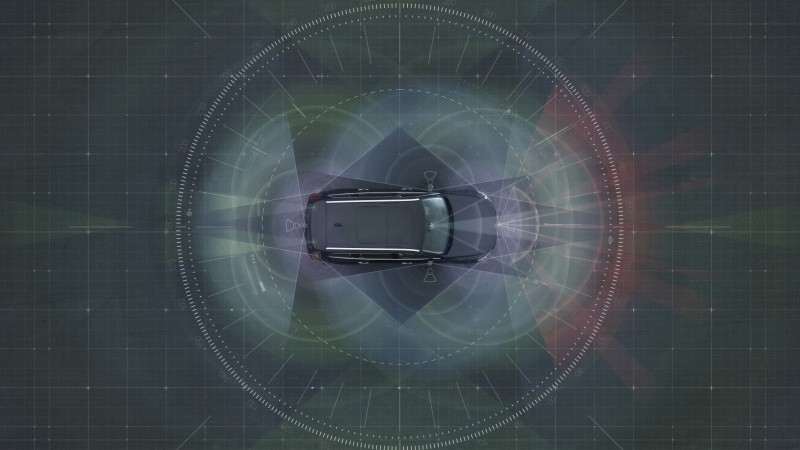
Volvo Cars this week announced the completion of the project to create a car with an autopilot, which is scheduled to be put on the road in two years.
The Swedish company expects to be able to release a commercial version earlier than Nissan, Google and other competitors who are currently testing.
Volvo's drone design includes 28 cameras, lasers, sensors, and radar scanners, as well as high-resolution 3D terrain and GPS positioning.
')
Here are some details of the design.
Combined radar and camera . The radar at a frequency of 76 GHz and the camera are mounted in the upper part of the windshield. They recognize road signs, scan the characteristics of the road and distinguish other vehicles on the road.


Radar around the perimeter . Four radars in the corners of the body behind the bumpers provide a 360-degree view.


Cameras around the perimeter recognize surrounding objects and stripes on the road. Two cameras are located under the rear-view mirrors, one in the rear bumper, and another in the grille.


A multi-beam laser scanner is built into the front bumper and scans the area 150 meters ahead, recognizing invisible pedestrians (for example, behind bushes or a fence), other cars and other objects.

Three-focal camera : three cameras with different focal lengths in one module give a rudimentary form of distance perception. The first camera has a field of view of 140 °, the second has 45 °, and the third “long-range” has 34 °. Comparing the picture from three cameras, the autopilot determines the distance to the objects and between them.

Long-range radar : two such radars are installed under the rear bumper and track what is happening behind the car. Their readings are used when changing lanes to the next lane.

Ultrasonic sensors : 12 sensors are scattered on the body, they work on the same principle as parking sensors, determining the proximity of pedestrians and other objects at low speed.


3D-terrain map is loaded into the car initially, and updates come through the Internet.

“A driverless autopilot will fundamentally change our view of cars,” said Peter Mertens, head of Volvo’s research and development division. He believes that the industry is entering an “uncharted” territory and has to overcome difficulties in meeting strict safety requirements.
Mertens said that Volvo engineers designed backup systems in case of failure of different autopilot units, and unmanned vehicles react "faster than most people" in emergency situations.
“It is not enough to make such a complex system 99% reliable,” said the specialist. “We need to get much closer to 100% before running the autopilot on real roads with live drivers.”
Volvo plans to begin mass testing of about 100 unmanned vehicles on the streets of Gothenburg in 2017.
Source: https://habr.com/ru/post/376737/
All Articles