What is the difference between designing a metro station and designing a cottage?
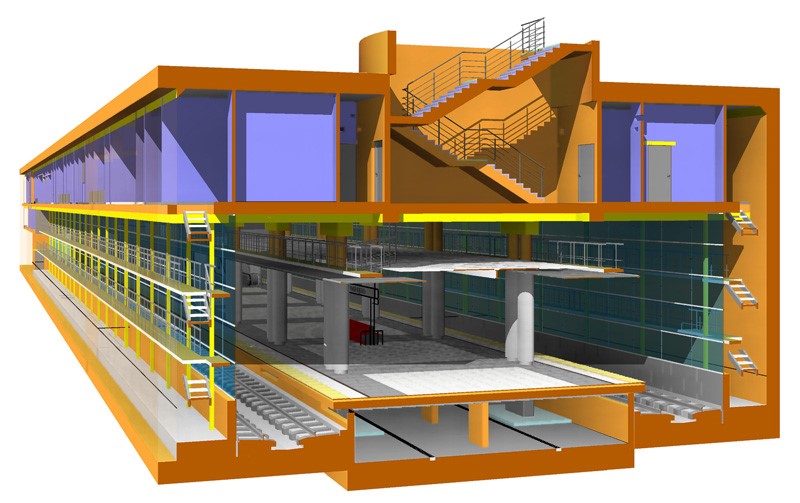
In the engineering part, of course, everything. The list of differences is about the same as that of a steam locomotive and an orange. But in part of the interior - is minimal. Unless there are no facades, there is no filling of external openings, there are a lot of unique stainless steel doors. Before CROC, I worked in the project team of Inzhproekt of 25 people at 4 stations, already new, that is, quite narrow in terms of budget. I'll tell you on the example of "Rumyantsevo", where I was responsible for the interior.
We have a team of architects in an IT company, and therefore we are often asked such questions. I will try to answer this and a couple more frequent.
')
About the metro, let's start with the fact that now all the stations make unique. Previously, back in the USSR, there were the so-called “centipedes” (they were also called “toilet stations” because of the tiles in the jargon) - they were launched one at a time, they were looking for the best look of the station. They even found it, but later they came to the conclusion that it is necessary to make the station different.
Introductory
So, at the entrance of our "cottage" - a picture with a concept from the director of the metro or the chief architect of the city (you need to get as close as possible to it in appearance, but there are not very many details in it), a lot of standards (the most important are firemen), a technical task ( with an indication of the types of materials) and some more introductory. From the point of view of the BIM model, there is a bare volume in reinforced concrete that needs to be filled. Of course, in reality, he probably has not yet been created, but in the design model we fill it with him.
Further there are three big stages: breakdown into premises, decoration and engineer. The second and third stages are done simultaneously, and not one after the other.

1. Breakdown into rooms
There is a volume that is defined by the constructor: it is the skeleton of the station, it consists of a platform, an escalator group, a vestibule and transitions (if any). This is "given" in reinforced concrete.
Then the technologist says what exactly is needed for the station: the police room, the ticket office, the lobby with turnstiles, and so on. All this is strictly regulated, and this is part of my introduction to the interior. Plus there are regulatory requirements and standards - for example, all new stations have elevators for disabled people, inclined ramps for wheelchairs, and corrugated tactile tiles.
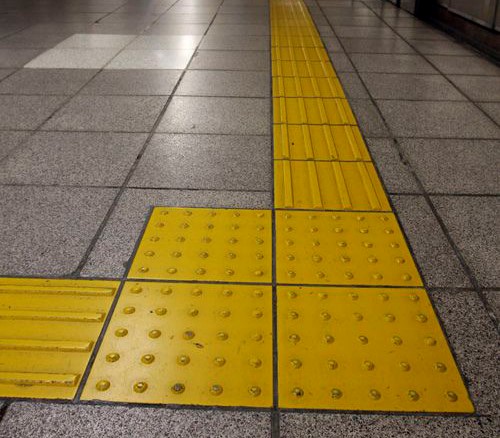
Here is this tile. The strip at the edge of the ceiling, the first and last steps of the stairs are indicated by a contrasting color and tactile projection.
My first task is to “cut” the station into the premises. This resembles a trace of the board: there are many options for placement, but you need to choose one of the best. The task is complicated by the fact that in the course of work requirements may vary slightly. For example, the Rumyantsevo constantly had to be adjusted, because there were requirements for new openings — the work of an architect, a designer, and engineers. At the end of the work we get rooms with attributes, a complete breakdown with areas.
This breakdown is shown to subcontractors responsible for the operation of the station. In response, they send comments and suggestions in the spirit of "I ask you to increase the ventilation chamber to 25 square meters, now there is not enough air to be removed." Firefighters may note: "here you need to put a fire barrier or fire curtain." By the way, yes, unlike the cottage, the subway stations are very carefully protected from fire: the experience of London and other cities has shown how important this is. From the fact that passengers usually do not know - that on escalators special non-combustible curtains are provided: they fall and cut off the escalator from the platform just in order not to create this air flow. Fastening curtains can be seen at the entrance to the platform. Some people take them as hermetic housings or fragments of the doors of air-raid shelters since the Second World War, but this is not so, of course.
At the end of the stage, there are clear boundaries of the premises, and all subcontractors are satisfied. Well, almost everything. Someone more satisfied, someone less (for example, on this project, the switchboard was slightly trimmed for the sake of ventilation).
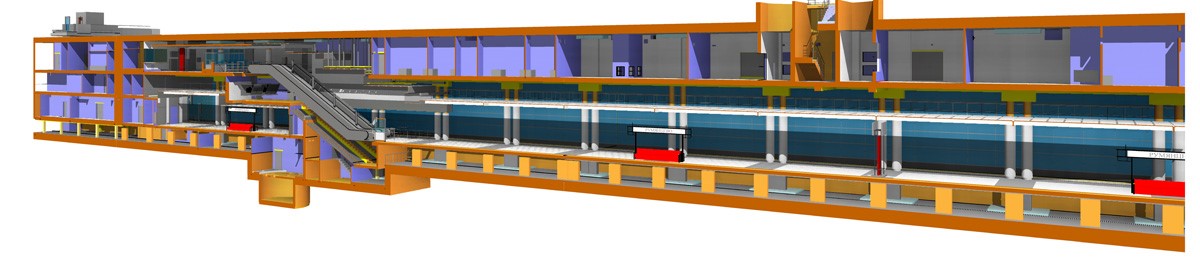
2. Set the finish
Everything begins, as in the usual situation, with the counting and selection of doors. In our case, the doors are a bit special - most often they must be non-combustible with glazing, or with stainless steel. In the police station also with grids. Door properties are dictated by the requirements of regulatory documents.
After the door comes navigation. Visual signs are laid out before hanging chandeliers and placing other prominent things (such as steel trees from the floor on the Troparyovo), because navigation is more important. By the way, in navigation the name “Troparyovo” on traveling walls is the only one in the subway, written with the letter “” (that is, with two points above the “e”).
Then parallel processes begin. Light, finish. With light, the features are as follows: the platform is quite large, and you need to calculate the light very carefully. We use a special software for modeling lighting, allowing to take into account the dispersion, reflection from different materials and so on. It is considered to be faster than the distribution of sound for stadiums or temples , of course. It looks like this:
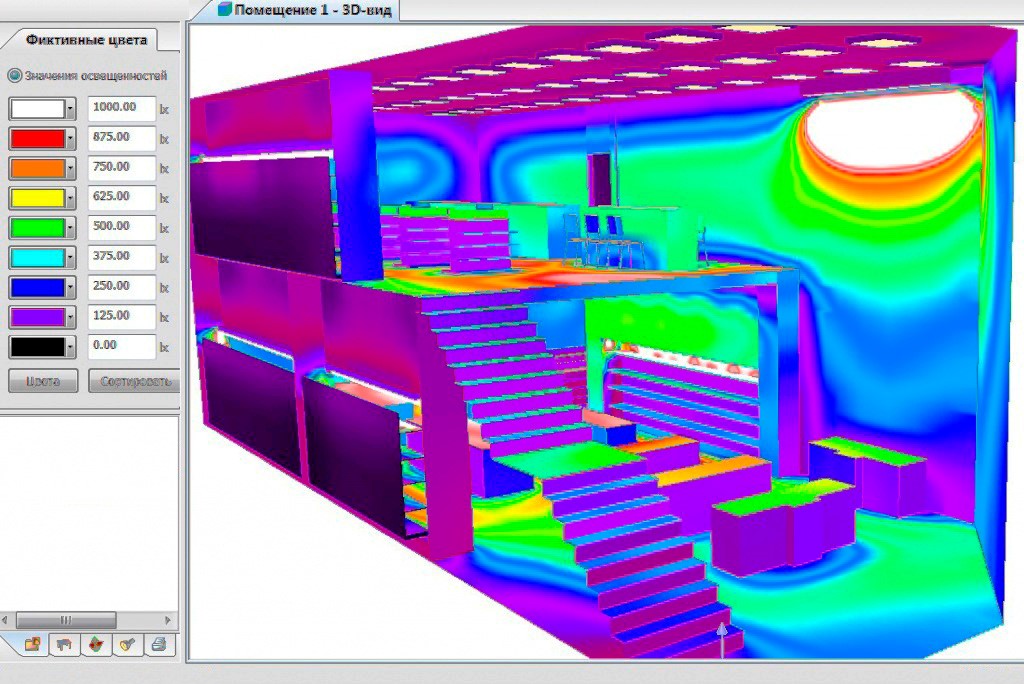
All light sources have properties, and the materials are already known as a whole, so we know the reflection. We simply cannot make a dark station according to the standard, but if it is brighter than in the project in the picture (and, moreover, within the budget), this is most often a plus.
With the finishing materials in detail the longest at this stage. We consider, for example, ceiling panels, we consider the floor, walls. We send requests to suppliers. About the floor - it is known, for example, from the standard and the TK, that it must be a very wear-resistant material (millions of people will walk on it in a month), therefore only natural stone is suitable. Suppose it is granite. We look at how you can meet the concept of the designer and select the material for the idea. Suppose we decided that we will have a “Siberian light” granite. Further requests to manufacturers begin - who, how much and how quickly will produce the required number of plates. One manufacturer sends what can be done as it should, plate meter by meter, but expensive. The second says - will be 500x500 mm, but much cheaper. And so on. The dimensions of the plates in the process of choosing a supplier may vary.
Separately, it is worth noting the trim wall. Even in the USSR, they noticed that the vibration of trains makes tiles fall off very quickly. Therefore, a false wall is now put on dampers. The tile, of course, must be gradually changed, but not as quickly as at the first stations of the subway. And this is the task of exploitation - they keep an adequate supply of tiles. By the way, we already have a couple of stations on the Kiev line, which can change color in the future, since the Russian deposits of the corresponding stones for finishing the track walls are close to exhaustion.
The end of this stage is a specific type of station with the detail of all materials, the fire hazard of each individual room, the escape route.
3. Engineering subsystems
This stage is the most time consuming because it consists of permanent alterations. Dozens of subsystems must be coordinated (weak current, fire fighting, ventilation, and so on) so that all subcontractors like it. If the subcontractor wants to edit, we adjust. My colleagues described a lot here .
This design ends, we pass the documentation. It is approved by the director of the metro and a number of authorities.
Next is a separate task - supervision, that is, to see that your documentation correctly implemented.
More details
In an office building we can attach 10 stairs and just go outside for evacuation. And you can't do it in the subway, so the platform should have very good access - two edges from which you can quickly evacuate.
Very important waterproofing. It largely dictates the materials, the same finish of the floor, including the lobby and technical rooms. Our station is also inclined on the long side of the platform.
Frequently asked questions
So, we are engaged in designing in a BIM-environment, and each has its own specialization. Let's talk a little about other frequent questions of colleagues and about themselves.
Here is our team:
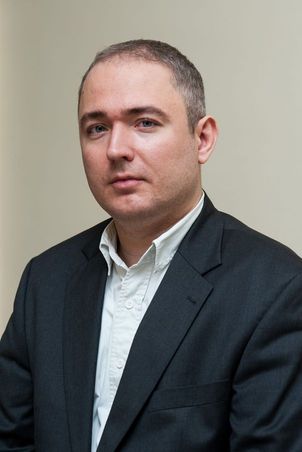
Rodion Belov is the chief architect of CROC.
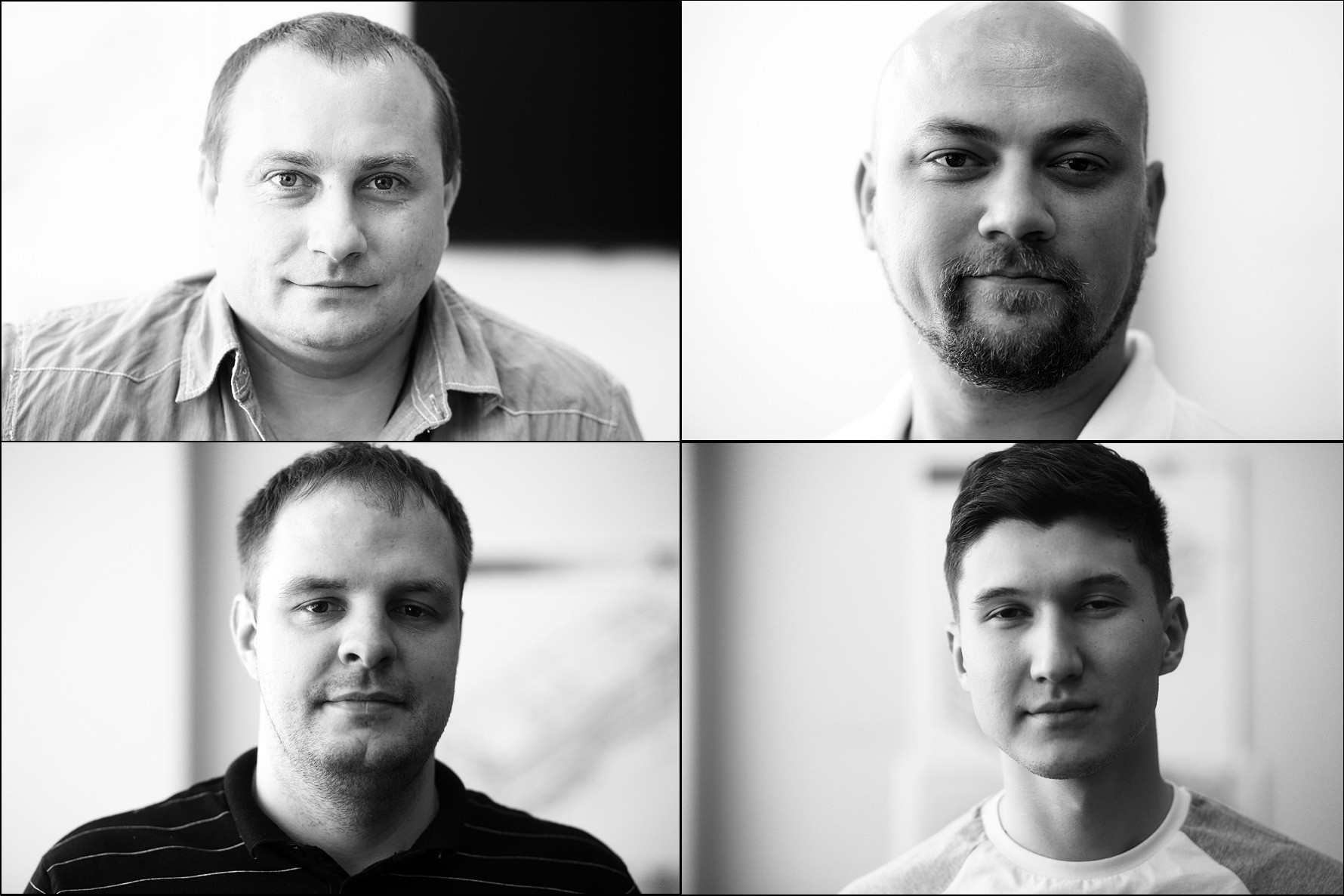
Alexander Skrypnik - architect, BIM-manager.
Yuri Yakovlev - engineer, BIM-master.
I am Roman Stepanov - engineer, BIM-master.
Alexander Apkhanov - engineer, BIM-master.
Here are our computers:
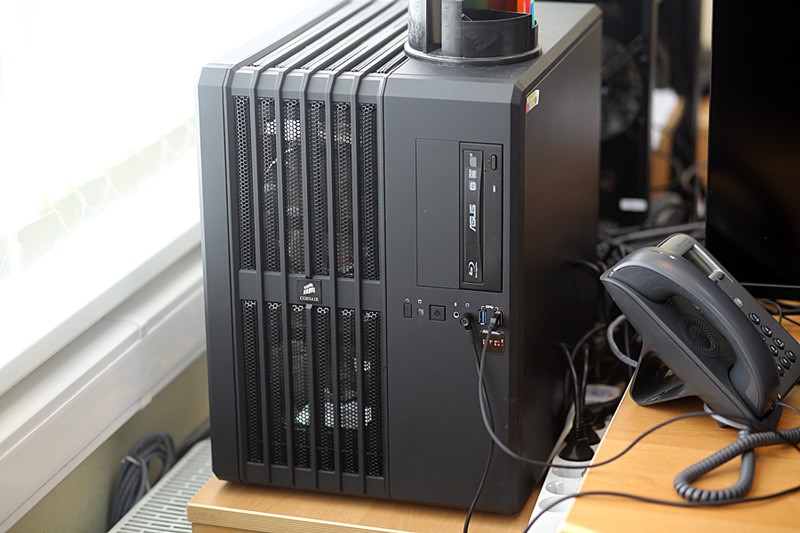

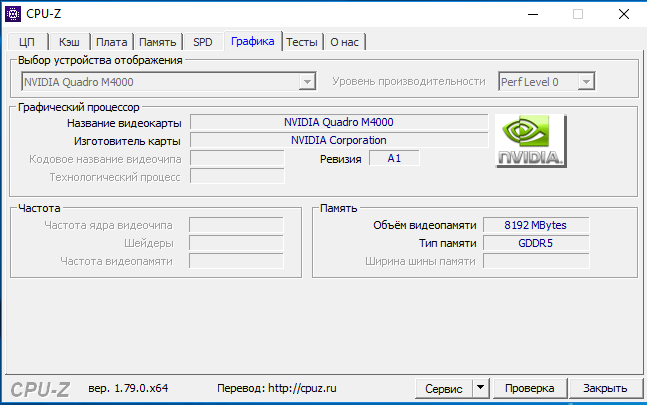
They are so strange because there are game stations inside. We need them for calculations. Here is the spec of my car:


My colleague Alexander worked in the general layout of Moscow (the architectural studio of Sergey Tkachenko, in the creative workshop Atrium), and participated in the work of the Symbol residential complex on the territory of the Serp & Molot plant. The design engineering stage was done up to the nail on the LOD 400, then later even the screw models were set up by colleagues.
He is asked what is special about it. It is difficult to formulate, because there are a lot of details. The project is advanced in architecture in Moscow, and not even in terms of appearance, although it is one of the best residential complexes, but in terms of fitness for life. 5 houses of variable number from 5 to 27 floors. Good decoration of public spaces - corridors, elevators, foyer. Balconies from the building are not cut off (the same Peak, for example, replaces the balconies with basement storage rooms to solve problems with insolation - residents often arrange a rubbish dump on the balcony). The first floors of public use: shops, cafes, gym, social and cultural life. School and kindergarten inside the complex. The whole area is a single plan. On the ground floor you can rent an office and sit to work. The main goal is to solve the pendulum migration problem so that you can work and do everything you need right around the house, as in compact spaces in Switzerland. Comfortable environment. Inside the complex is a pedestrian boulevard, cars do not drive.
Rodion Belov is the chief architect of CROC.
Our ideological leader, hereditary architect, graduated from Moscow Institute of Architecture. Prior to KROK, he worked at a large architectural bureau as a leading architect and chief architect of the project. In KROK, under Rodion, such projects as the reconstruction of the Arbitration Court in Smolensk, the design of one of the SEZ, the data center abroad, the BIM model of the KROK office building and even the design of an innovative city were implemented.
Yura is a unique person by the speed of BIM mastering. He very tightly went to work with an engineer. It is he - the person who works wonders at the stage of coordination between the subcontractors. He says that BIM for these tasks is just perfect - it is very easy to make a mistake on 2D-paper, but in 3D you can knead everything in such a way that even a very stupid contractor cannot mess up much. Yura gets some pretty interesting decisions. Most of all, he recalls the box, which wrapped itself around a snake column - there, on the project, the chief architect agreed to triple overrun of materials, just to fit all the necessary systems. It was necessary to bypass the bearing structures of the building, so the communications twisted around the elements. Air duct and columns - like a boa embraced a tree.
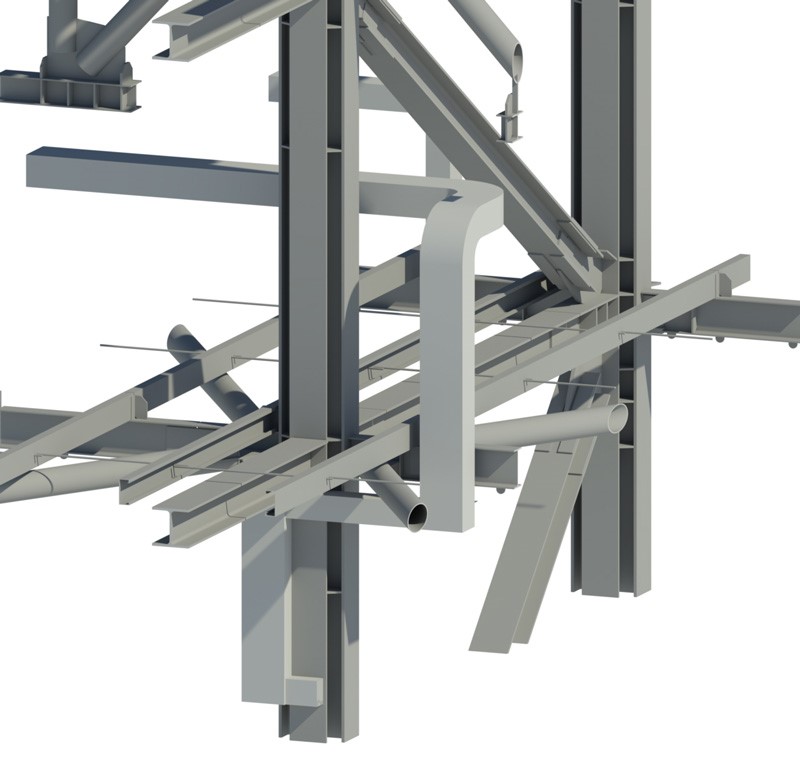
This is not a mistake, but a complex design decision.
Yura and Sasha Apkhanov are engaged in electrics and SCS, low current, automation. Apply on the circuit equipment SKS, automation, security - cameras, sensors, and so on, everything is automated.
Here are some of these roles. Even now, new people have come, they will be engaged in automation more closely - for example, we have a project where sensors are installed inside the stadium that monitor the quality of the material, and if something suddenly starts to weaken inside the supporting structures, or if a fire occurs, they will report into operation immediately. Now a lot of people are switching to BIM-design - not even because there are a lot of such cool chips, but simply because it is very hard for contractors to steal with BIM-project. Saving 20-30% somewhere.
But, of course, we also work a lot with paper. And without a special table in any way:

Links
• Reconstruction of the courthouse in Smolensk
• About engineering subsystems of buildings
• The sound of the temple and the stadium
• About BIM- design environment
• My mail is RStepanov@croc.ru.
Source: https://habr.com/ru/post/338874/
All Articles