Login or Log in?

'Login' or 'log in'? One word or two? This is a fairly common question among those who write in English. Let's see how correctly.
'Login' and 'log in' are not the only couple of words that cause difficulties. There are many more such cases:
- 'logon' or 'log on';
- 'logout' or 'log out';
- 'signup' or 'sign up';
- 'shutdown' or 'shut down';
- 'backup' or 'back up';
- 'setup' or 'set up'.
How about an experiment?
Try saying sentences in which the word 'backup' is replaced by 'bbbbbb':
- What is your bbbbbbb strategy?
- When did you last bbbbbbb your data?
- When did you last a bbbbbbb ?
And in these sentences we replace 'login' with 'llllll':
- What are your llllllll details?
- Where can I llllllll to the bank's website?
- My llllllll failed.
Noticed any pattern? Most likely, you felt some tension in the second sentence of each example. As if they lack another pause in the middle.
How should it be?
'Backup' or 'back up':
- What is your backup strategy?
- When did you last back up your data?
- When did you last do a backup ?
'Login' or 'log in':
- What are your login details?
- Where can I go?
- My login failed.
Rule
According to the rules it should be like this:
- if it is a verb, write separately: back up , log in ;
- if it is a noun, then write together: backup , login .
Is it permissible to use a hyphen instead of a space? Most writers say no.
To the issue of buttons
On login forms you can find both 'login' and 'log in':
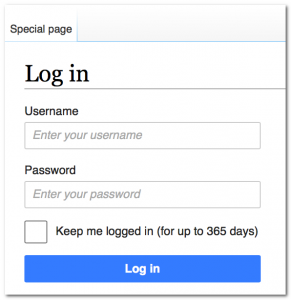
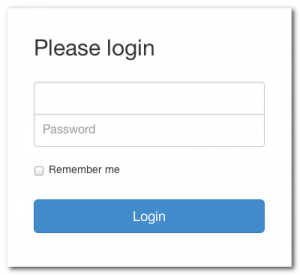
Since the button implies an action, the 'Log in' would be more correct. The form itself or the authorization tab may be called 'Login' (i.e., "Login"):
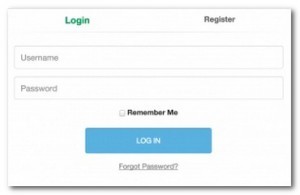
Once again: log in is an action, login is an entity.
What's the difference?
In Russian, there is no exact analogue to this rule. “Can I log in” can be successfully translated as “whether I can enter my login” and how “can I log in”. But imagine a situation in which a foreigner will confuse Russian verbs and nouns:
- This morning I have breakfast .
- After breakfast, I went to work .
These are the features of the language. If you write at random, it can cause confusion or even irritation from the user. But the documentation should help people, not make them angry. Right?
Sources
Continuing the theme: Login / Logon, Frontend / Front-end and other interesting nuances .
')
Source: https://habr.com/ru/post/313774/
All Articles